
Articles · The state and taxes
Tax Freedom Day 2026 in Czechia: you worked for the state until 24 June
An average Czech employee works 175 days of 2026 to pay taxes and contributions. Here is how we counted it, and why the real number is hidden from your payslip.

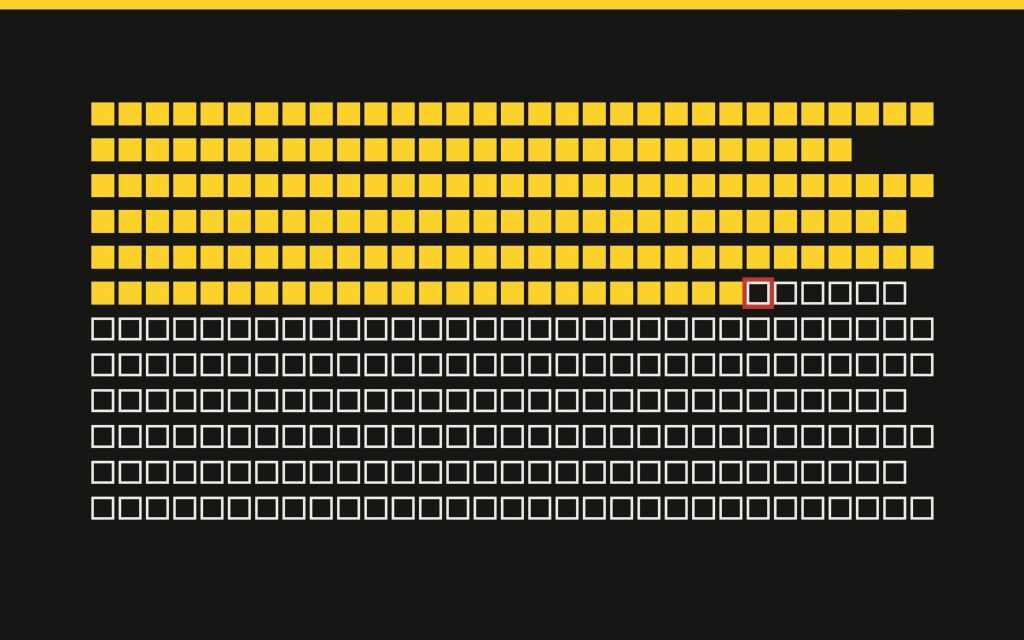
If you earn the average Czech wage, in 2026 you worked for the state from 1 January until 24 June. Only from 25 June on did you work for yourself. That is 175 days, almost half of the year.
The numbers in short
- Average wage for 2026 (set by government decree): 48,967 CZK a month.
- What it really costs your employer: 65,518 CZK a month, including the contributions paid “on top”.
- What you take home: about 38,500 CZK.
- Taxes and contributions on your work: 41.2% of the full cost of your labor.
- Estimated VAT on what you spend: a further 6.6%.
- Together: 47.9% of the year, or 175 days.
How we counted it
Our calculator starts from the full cost of your work: the gross wage plus the social and health insurance your employer pays on top of it. Economically, all of that is the value of your labor; the employer would pay it to you if the state did not take it first.
From that amount we subtract what the state takes:
- employer social insurance (24.8%) and health insurance (9%),
- employee social insurance (7.1%) and health insurance (4.5%),
- income tax (15%, minus the basic taxpayer credit).
Then we add an estimate of VAT on what you spend from your net pay. VAT is already inside the price: of 121 CZK paid at the standard rate, 21 CZK is the tax, about 17.4%. Not everything you buy carries the full 21%, and some of your income is saved, so we count roughly two thirds of your net pay as spent at the standard rate. Excise duties on fuel, alcohol and energy, property taxes, fees and inflation are not included. The real number is higher. The Liberal Institute and Deloitte publish other dates because they count differently: from public spending or tax revenue as a share of the whole economy, not for one employee.
The tax you never see
Ask people how much tax they pay and most will name the income tax on their payslip. For an average wage that is about 4,800 CZK a month. Yet the state takes more than 27,000 CZK a month from the cost of that same job, before you spend a single crown. Most of it never appears on your payslip at all.
That is not an accident. Taxes people cannot see are the easiest to raise. Employer contributions, VAT built into prices and inflation all share one feature: nobody gets a bill.
Higher and lower wages
The burden does not fall much for lower earners. At 30,000 CZK a month, Tax Freedom Day falls on 17 June. At 80,000 CZK it moves to 30 June. In the Czech system, most of the burden comes from flat contributions, not from the progressive income tax.
How Czechia compares
On the OECD’s measure of taxes on an average wage, Czechia ranks 11th of 38 developed countries, level with Hungary, in the upper third (OECD Taxing Wages 2026, data for 2025). Belgium, Germany and Austria take more; Switzerland, the United States and Poland take less. See the comparison in our guide is taxation theft?, or pick any of 38 countries in the calculator.
What to do with this number
Share it. Most people have never seen it, and it changes conversations about “free” public services. Then ask the question every libertarian asks: if a private person took half of what you earn, what would you call it?
The calculation is a guide, not tax advice. Rates for 2026; average wage of 48,967 CZK set for 2026 by Government Decree No. 365/2025 Coll.; the 23% income tax band starts at 36 times that amount.
Sources
- Government Decree No. 365/2025 Coll.: the average wage for 2026, 48,967 CZK.
- Act No. 586/1992 Coll. on income taxes: 15% and 23% rates, the basic taxpayer credit of 30,840 CZK a year.
- Acts No. 589/1992 and 592/1992 Coll.: social insurance (24.8% employer, 7.1% employee) and health insurance (9% and 4.5%).
- OECD: Taxing Wages 2026, tax wedge on the average wage in 38 countries (data for 2025).
Your progress
Saved only in your browser, never sent to us. Read all 14 guides and you get a diploma. All guides →Keep it, share it
Save the article as a PDF to read offline, or send it to someone who should read it.
Was it worth your time?
The guides are free and carry no banner ads. A few sats help keep it that way.
Send a tipYour diploma
You have read all 14 guides. Congratulations!
Your name stays in your browser. We never see it.